
Kicking off with Bookkeeping and accounting services, this opening paragraph is designed to captivate and engage the readers, setting the tone casual formal language style that unfolds with each word.
In the realm of financial management, the roles of bookkeeping and accounting are crucial for businesses to thrive. Let’s delve into the details of these services and explore their impact on the financial landscape.
Overview of Bookkeeping and Accounting Services
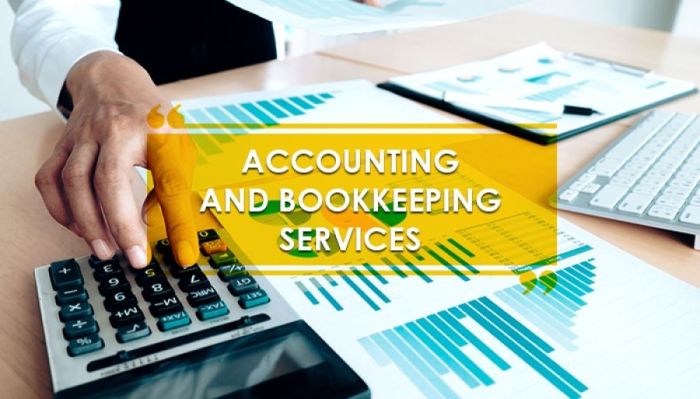
Bookkeeping and accounting are essential financial functions for businesses, but they serve different purposes. Bookkeeping involves the daily recording of financial transactions, while accounting focuses on interpreting, classifying, analyzing, and summarizing those transactions.
Difference between Bookkeeping and Accounting
- Bookkeeping tasks include recording sales, purchases, receipts, and payments in a ledger. It also involves maintaining accurate financial records, such as payroll, invoices, and bank reconciliations.
- Accounting tasks, on the other hand, involve preparing financial statements, analyzing financial data, creating budgets, and providing insights for decision-making.
Importance of Accurate Bookkeeping and Accounting for Businesses
Accurate bookkeeping and accounting are crucial for businesses for several reasons:
- Tracking financial transactions ensures compliance with tax laws and regulations.
- Proper financial records help businesses make informed decisions based on accurate data.
- Financial statements prepared through accounting provide insights into the financial health of the business and aid in strategic planning.
- Accurate bookkeeping and accounting can help identify areas for cost-saving and revenue growth.
Benefits of Outsourcing Bookkeeping and Accounting Services
Outsourcing bookkeeping and accounting services can provide numerous benefits for businesses of all sizes. Not only can it help in saving costs, but it can also improve accuracy and efficiency in financial management.
Cost Savings
Outsourcing bookkeeping and accounting services can lead to significant cost savings for businesses. By outsourcing these tasks, companies can avoid the expenses associated with hiring and training in-house staff, providing office space, and purchasing accounting software. Additionally, outsourcing allows businesses to only pay for the services they need, reducing overhead costs and increasing overall cost-efficiency.
Improved Accuracy and Efficiency
Outsourcing bookkeeping and accounting services to professionals can lead to improved accuracy and efficiency in financial reporting. Experienced accounting firms have the expertise and resources to ensure that financial records are maintained accurately and up-to-date. This can help businesses make better-informed decisions based on reliable financial data, leading to improved overall performance.
Examples of Companies Benefiting from Outsourcing
Many companies have successfully benefited from outsourcing their bookkeeping and accounting services. For example, small businesses with limited resources have been able to access professional accounting expertise at a fraction of the cost by outsourcing. This has allowed them to focus on core business activities while ensuring their financial records are properly managed. Larger corporations have also seen benefits in terms of increased efficiency and accuracy by outsourcing repetitive accounting tasks to specialized firms.
Importance of Timely Financial Reporting
Timely financial reporting is crucial for businesses as it provides up-to-date information on the financial health of the company, enabling informed decision-making processes.
Significance of Timely Financial Reporting
- Allows for better decision-making: Timely financial reports provide accurate and current data that can help business owners make informed decisions regarding investments, budgeting, and overall financial strategies.
- Improves financial management: With timely reporting, businesses can monitor cash flow, identify areas of improvement, and implement necessary changes promptly to ensure financial stability.
- Builds trust with stakeholders: Consistent and timely financial reporting builds trust with investors, creditors, and other stakeholders, demonstrating transparency and accountability in the company’s operations.
Impact of Delayed Financial Reporting
- Missed opportunities: Delayed financial reporting can result in missed opportunities for growth or cost-saving measures, as decision-makers do not have access to timely information.
- Lack of financial control: Without timely reports, businesses may struggle to track expenses, revenue, and overall financial performance, leading to potential financial mismanagement.
- Legal and compliance issues: Delayed financial reporting can lead to non-compliance with regulatory requirements, resulting in penalties, fines, and damage to the company’s reputation.
Technology Trends in Accounting Services
Automation and software have played a crucial role in transforming modern bookkeeping and accounting practices. With the advancement of technology, the traditional manual processes have been replaced by efficient automated systems, making the tasks more accurate and time-saving.
Cloud-Based Accounting Systems
Cloud-based accounting systems have revolutionized the industry by providing accessibility, flexibility, and real-time collaboration for professionals. These systems allow users to access their financial data anytime, anywhere, and from any device with an internet connection. Popular cloud-based accounting software includes QuickBooks Online, Xero, and FreshBooks.
Key Differences Between Accounting Services and Bookkeeping Services
Bookkeeping and accounting services are both crucial for managing the financial aspects of a business, but they serve distinct purposes and have different scopes of work. Bookkeeping lays the foundation for accounting by recording financial transactions, while accounting involves analyzing, interpreting, and summarizing financial data to provide insights for decision-making.
Tasks Specific to Bookkeeping Services
- Recording daily financial transactions such as sales, purchases, receipts, and payments.
- Maintaining ledgers and journals to track income and expenses.
- Reconciling bank statements and ensuring accuracy of financial records.
Tasks Specific to Accounting Services
- Preparing financial statements like balance sheets, income statements, and cash flow statements.
- Analyzing financial data to assess the financial health of the business.
- Providing financial reports and insights to help with strategic decision-making.
In conclusion, Bookkeeping and accounting services play a vital role in ensuring the financial health and success of businesses. By understanding the nuances of these services, companies can make informed decisions that pave the way for growth and prosperity.
Essential FAQs
What is the difference between bookkeeping and accounting?
Bookkeeping involves the daily recording of financial transactions, while accounting focuses on interpreting, classifying, analyzing, and summarizing financial data.
How can outsourcing bookkeeping and accounting services benefit a company?
Outsourcing can lead to cost savings, improved accuracy, and enhanced efficiency for businesses, allowing them to focus on core operations.
Why is timely financial reporting important?
Timely financial reporting provides insights for decision-making processes, helps in monitoring business performance, and ensures compliance with regulations.
What are some popular accounting software used by professionals?
Examples include QuickBooks, Xero, FreshBooks, and Wave, which are widely used for their user-friendly interfaces and comprehensive features.


